Key Takeaways
- High-element activities challenge people through height and exposure, not strength or speed.
- In group settings, fear shows up as hesitation and self-consciousness rather than panic.
- Good facilitation focuses on pacing and reassurance instead of pushing everyone to finish.
Introduction
When a group event involves activities at height, the first concern usually appears during planning, not on the day itself. Organisers start thinking about uneven confidence levels, who might hesitate, and whether the activity will make people uncomfortable in front of colleagues or classmates. High-element activities bring these concerns forward because participation is visible and paced. Understanding what they actually feel like helps organisers judge whether a team building outdoor activity will support the group or quietly divide it.
What Counts as High-Element Activities in Group Events
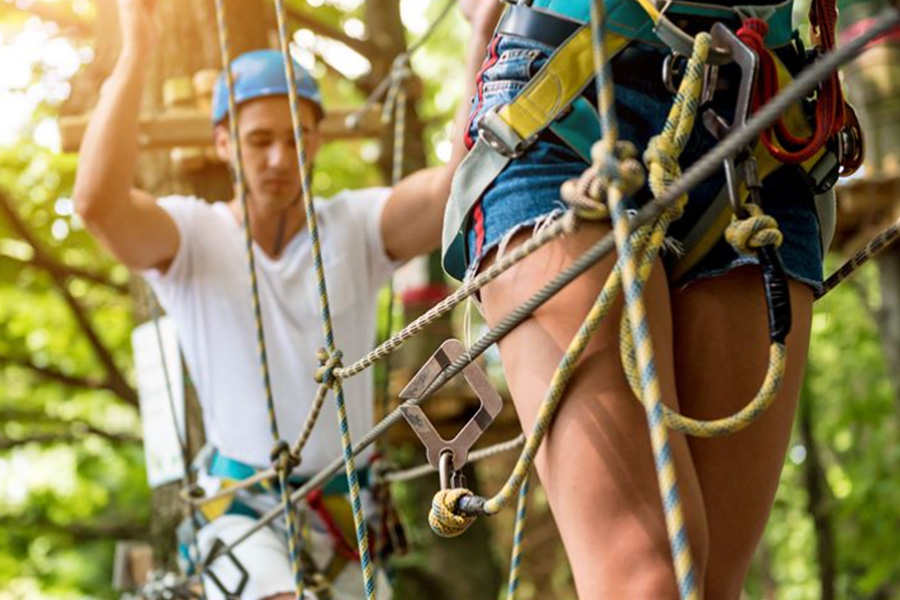
For group events, high-element activities usually refer to challenges set above ground level where participants move through platforms, ropes, or obstacles while secured by safety systems. The defining feature is height and exposure, not speed, strength, or athletic ability. Because participants take turns and move at different paces, everyone can see who is confident, who hesitates, and who needs more time.
This visibility is what makes high-element activities feel different from ground-based games. The activity does not happen all at once. Instead, attention naturally shifts to the person currently on the element, which can increase self-awareness for those who are unsure.
How Different Participants Typically Respond
In mixed groups, reactions tend to fall into familiar patterns. These responses are not problems to fix, but realities organisers need to plan around.
- Some participants step forward quickly and complete elements without hesitation.
- Others take longer to assess the situation and move cautiously once they start.
- A few may pause at the platform or decide not to proceed at all.
In a team building outdoor activity, these moments shape the group experience more than the obstacle itself. How waiting participants behave, whether encouragement feels supportive or pressuring, and whether opting out is treated neutrally all affect whether people remain engaged.
What Makes the Experience Comfortable or Uncomfortable
The difference between a supportive session and an awkward one usually comes down to pacing and facilitation, not difficulty.
| What Helps the Group | What Creates Tension |
| Clear briefing before anyone starts | Rushing people to keep momentum |
| Normalising hesitation | Calling attention to delays |
| Allowing observation without pressure | Treating participation as mandatory |
| Quiet guidance from facilitators | Loud commentary from peers |
When these factors are managed well, participants feel less exposed even when the activity itself involves height.
Why Height Changes Group Dynamics
High-element activities surface group behaviour quickly because discomfort cannot be hidden. People notice who offers reassurance, who withdraws, and who becomes impatient. These reactions are rarely deliberate, but they influence how safe others feel continuing.
For organisers, this is the core value of using height in a team building outdoor activity. The goal is not to push everyone to complete the same obstacle, but to observe how the group handles uneven confidence in a shared setting.
Choosing a Suitable Environment
Group organisers often look for environments where these dynamics are anticipated rather than treated as disruptions. Structured outdoor parks such as Forest Adventure are commonly evaluated because their high-element activities are designed with varied comfort levels in mind, allowing facilitators to adjust pacing and flow without singling people out.
This kind of structure helps reduce anxiety during planning and lowers the risk of resistance once the group arrives.
Conclusion
For group events, high-element activities work best when hesitation is expected and handled without pressure. The experience is less about finishing obstacles and more about how people move through discomfort together. When organisers understand this dynamic early, a team building outdoor activity becomes easier to commit to and less likely to create resistance before or during the event.
Contact Forest Adventure to discuss how high-element activities can be planned for your next group event without putting pressure on participants.